
Those pesky strips of skin near your nails might seem minor, but anyone who’s experienced a hangnail knows they can cause surprising pain and discomfort. In this comprehensive guide, we’ll explore evidence-based methods for treating hangnails, preventing their occurrence, and maintaining healthy nail care habits.
What Is a Hangnail?
A hangnail is a small, torn piece of skin that appears near the edge of your nail, typically on the sides or base of the nail bed. Despite its misleading name, a hangnail isn’t actually part of the nail itself – it’s a strip of damaged skin that has separated from the cuticle or surrounding nail fold area.
Anatomy of a Hangnail
The area where hangnails occur is part of your nail’s protective barrier system. Your nail is surrounded by several important components:
- The cuticle (eponychium) – the thin strip of skin that seals the space between your nail plate and nail fold
- The nail fold – the soft tissue that frames and protects your nail
- The nail plate – the hard, visible part of the nail
- The nail bed – the tissue underneath the nail plate
Hangnails typically form when the delicate skin around these areas becomes damaged or dehydrated, causing small pieces to separate and tear.
Types of Hangnails
Not all hangnails are the same. They can vary in:
- Size: from tiny skin tags to larger strips
- Location: most common on the sides of fingers, but can occur on toes
- Severity: from minor irritations to painful, infected areas
- Appearance: from small, clear pieces of skin to reddened, inflamed tissue
Why Hangnails Are Problematic
Hangnails aren’t just a cosmetic concern – they can pose several health risks:
- They create an opening in your skin’s protective barrier
- These openings can allow bacteria and fungi to enter
- They can catch on clothing or objects, causing further tearing
- If infected, they can lead to more serious conditions like paronychia
I’ll help you create an engaging, SEO-optimized section about hangnails that includes the generated image. Let me expand on the “What Is a Hangnail?” section:
What Is a Hangnail?
Image of a close-up finger with a hangnail, showing the anatomy and affected area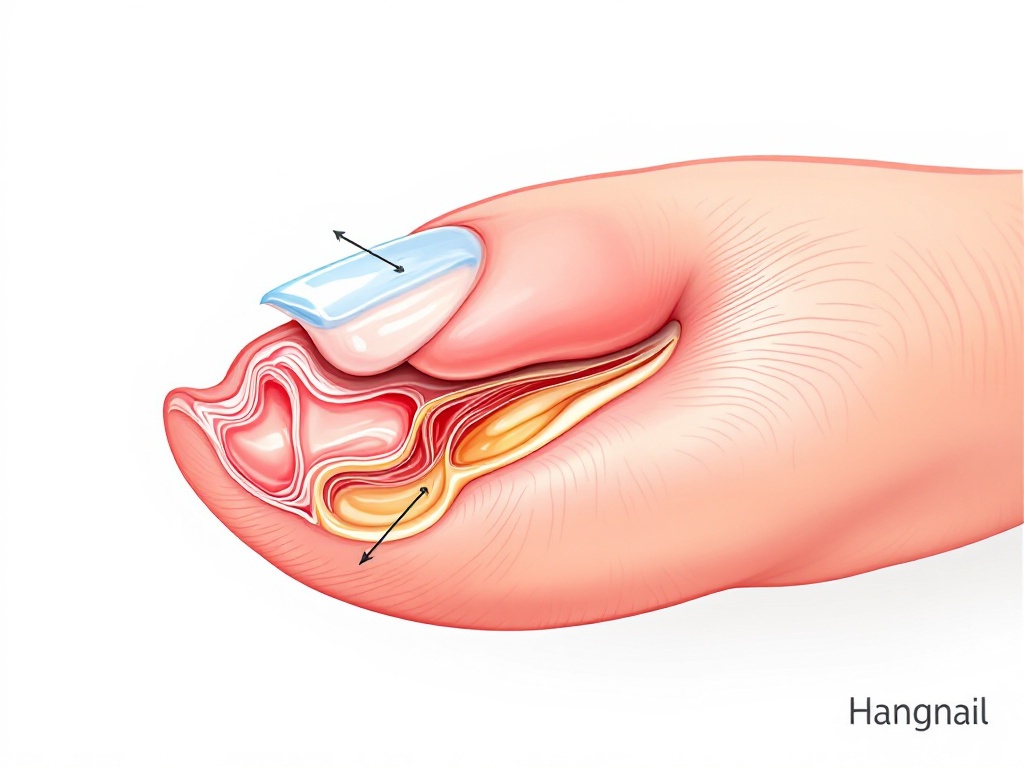
A hangnail is a small strip of torn skin that appears near the edge of your fingernail or toenail. Despite what the name suggests, a hangnail isn’t actually part of the nail itself – it’s a piece of damaged skin that has separated from the cuticle or surrounding nail fold area. These painful little tears can occur on any finger or toe but are most commonly found on the sides of the fingers.
Anatomy of a Hangnail
To understand hangnails better, let’s look at the nail area’s structure:
- Nail Plate: The hard, visible part of your nail
- Cuticle (Eponychium): The thin strip of skin that creates a seal between your nail plate and nail fold
- Nail Fold: The soft tissue that frames and protects your nail
- Nail Bed: The tissue underneath the nail plate
- Perionychium: The skin surrounding the nail plate
Hangnails typically form when the delicate skin around these areas becomes compromised, usually due to environmental factors or physical trauma.
Physical Characteristics
Hangnails can vary significantly in appearance and severity:
- Size: Range from tiny, barely visible skin tags to larger strips of torn skin
- Color: Usually match your skin tone but can become red if inflamed
- Texture: Often rough and jagged at the torn edge
- Location: Most commonly appear on the lateral nail folds (sides of the nail)
- Sensation: Can range from mildly annoying to quite painful, especially when caught on clothing or objects
Why Hangnails Develop
Understanding the nail’s anatomy helps explain why hangnails are more than just a cosmetic concern:
- The skin around your nails is particularly delicate and sensitive
- This area is constantly exposed to environmental stressors
- The combination of movement and exposure makes this skin prone to damage
- When the skin becomes dry or damaged, small pieces can separate and tear
- These tears create vulnerable entry points for bacteria and other pathogens
Common Causes of Hangnails
Image showing various environmental factors causing hangnails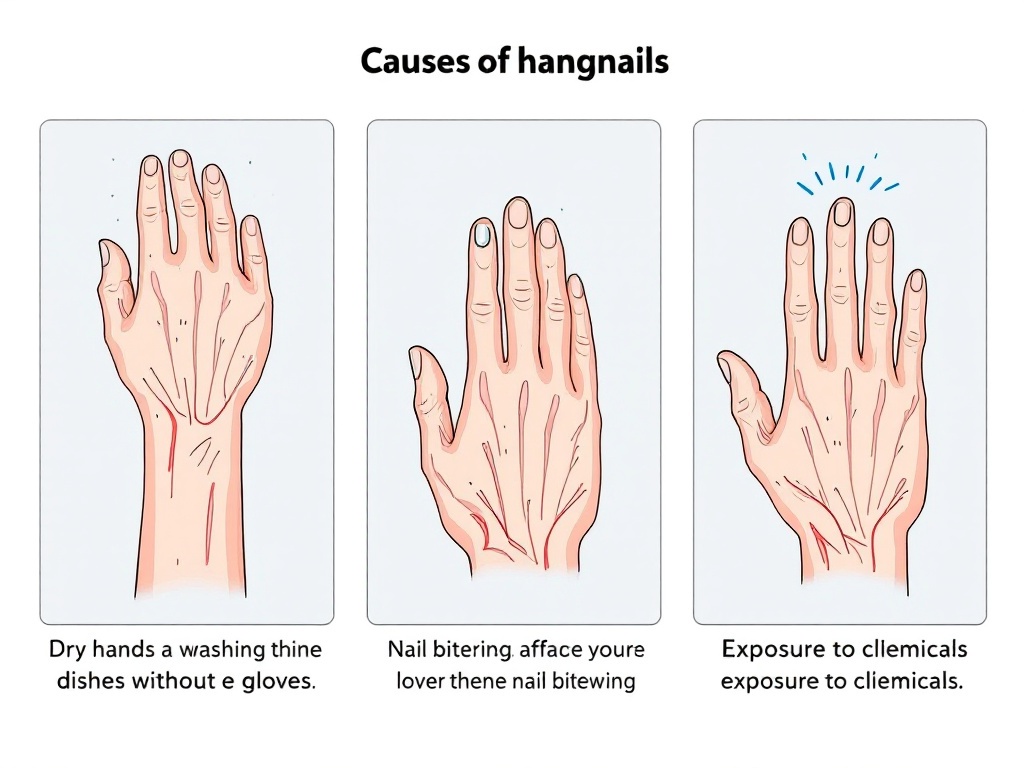
Understanding what causes hangnails is crucial for prevention and treatment. Here’s a comprehensive look at the most common factors that lead to hangnail formation:
Environmental Factors
- Dry Air and Climate
- Low humidity environments
- Winter weather conditions
- Heated indoor spaces
- Air-conditioned rooms
- Frequent exposure to wind
- Water Exposure
- Excessive hand washing
- Long periods of water immersion
- Hot water exposure
- Swimming in chlorinated pools
- Frequent dish washing without gloves
Behavioral Causes
- Nail Care Habits
- Biting or picking at nails and cuticles
- Cutting cuticles too short
- Using harsh nail care tools
- Improper manicure techniques
- Rough filing of nails
- Hand Care Practices
- Not using hand cream after washing
- Failing to protect hands during housework
- Aggressive hand drying
- Not wearing gloves in cold weather
- Using sanitizers without following with moisturizer
Chemical Exposure
- Household Products
- Cleaning solutions
- Dish soap
- Laundry detergents
- Bleach-based products
- Chemical solvents
- Beauty Products
- Harsh nail polish removers
- Artificial nail products
- Strong soaps
- Alcohol-based sanitizers
- Chemical peels
Health-Related Factors
- Nutritional Issues
- Vitamin deficiencies (especially B vitamins)
- Dehydration
- Low protein intake
- Insufficient healthy fats
- Mineral deficiencies
- Skin Conditions
- Eczema
- Psoriasis
- Contact dermatitis
- Dry skin conditions
- Poor circulation
Occupational Risks
- High-Risk Professions
- Healthcare workers (frequent hand washing)
- Cleaners and janitors
- Dishwashers
- Hairdressers
- Construction workers
- Work-Related Activities
- Typing and keyboard use
- Paper handling
- Manual labor
- Working with chemicals
- Frequent tool use
Prevention Tips for Each Cause
- For Environmental Factors
- Use a humidifier in dry spaces
- Wear gloves in cold weather
- Protect hands from excessive water exposure
- Maintain moderate water temperature
- Use moisturizing hand soap
- For Behavioral Causes
- Break nail-biting habits
- Practice gentle nail care
- Use proper manicure techniques
- Keep nails at a moderate length
- File nails in one direction only
- For Chemical Exposure
- Wear protective gloves
- Use natural cleaning products when possible
- Choose gentle nail care products
- Apply barrier cream before exposure
- Rinse hands thoroughly after chemical contact
Understanding these causes helps in developing an effective prevention strategy. By identifying your specific risk factors, you can take targeted steps to prevent hangnails from forming in the first place.
How to Treat Hangnails Safely
Immediate Care Steps
- Clean the Area
- Wash hands thoroughly with mild soap
- Use warm water to soften the skin
- Pat dry gently with a clean towel
- Trim Carefully
- Use sanitized nail scissors or clippers
- Cut as close to the base as possible
- Avoid pulling or tearing the hangnail
- Apply Treatment
- Use an antibacterial ointment
- Cover with a bandage if needed
- Keep the area clean and dry
Advanced Treatment Methods
For Non-Infected Hangnails
- Soak in warm water for 10-15 minutes
- Apply cuticle oil or vitamin E oil
- Use moisturizing hand cream
- Keep the area protected
For Infected Hangnails (Paronychia)
- Apply warm compresses 3-4 times daily
- Use over-the-counter antibiotic ointment
- Keep the area clean and dry
- Monitor for signs of worsening infection
Prevention Strategies
Daily Care Routine
- Moisturize Regularly
- Use hand cream after washing
- Apply cuticle oil daily
- Choose fragrance-free products
- Focus on nail beds and surrounding skin
- Protect Your Hands
- Wear gloves when washing dishes
- Use protective gloves for cleaning
- Apply sunscreen to hands
- Avoid excessive water exposure
- Proper Nail Care
- Don’t cut cuticles
- File nails in one direction
- Keep nails at a moderate length
- Use quality nail care tools
Nutritional Support
- Increase protein intake
- Consume vitamin-rich foods
- Stay properly hydrated
- Consider biotin supplements (consult healthcare provider)
When to Seek Medical Attention
Contact a healthcare provider if you experience:
- Severe pain or throbbing
- Redness spreading beyond the affected area
- Pus or discharge
- Fever
- Warmth around the affected area
- Swelling that doesn’t improve
Expert Tips for Long-Term Prevention
- Lifestyle Modifications
- Break nail-biting habits
- Practice stress management
- Maintain good hand hygiene
- Stay hydrated
- Environmental Considerations
- Use a humidifier in dry weather
- Avoid harsh soaps and sanitizers
- Protect hands from extreme temperatures
- Limit exposure to chemicals
- Professional Care
- Get regular professional manicures
- Use quality nail care products
- Follow proper nail trimming techniques
- Maintain consistent hand care routine
FAQs About Hangnail Treatment
What exactly is a hangnail?
A hangnail is a small strip of torn skin that appears near the edge of your fingernail or toenail. Despite its name, it’s actually not part of the nail itself but rather a piece of damaged skin from the nail fold or cuticle area.
Why do I keep getting hangnails?
Hangnails commonly occur due to several factors:
- Frequent hand washing without proper moisturizing
- Exposure to harsh chemicals or cleaning products
- Dry climate or cold weather
- Nail biting or picking at cuticles
- Vitamin deficiencies (particularly folic acid, vitamin B, and vitamin C)
- Dehydration
- Poor nail care habits
What’s the fastest way to heal a hangnail?
For quick healing, follow these steps:
- Soak the affected area in warm, soapy water for 10-15 minutes
- Carefully trim the hangnail with sanitized nail scissors
- Apply an antibiotic ointment
- Cover with a bandage if needed
- Keep the area moisturized
- Avoid picking or biting at the hangnail
When should I be concerned about a hangnail?
Seek medical attention if you experience:
- Severe pain or throbbing
- Significant redness extending beyond the affected area
- Warm or hot sensation around the nail
- Pus or discharge
- Red streaks extending up your finger
- Fever
- Symptoms lasting more than a week
Can a hangnail cause serious complications?
Yes, if left untreated, hangnails can lead to:
- Paronychia (nail fold infection)
- Chronic inflammation
- Bacterial or fungal infections
- Cellulitis in severe cases
- Long-term nail damage
What’s the best way to prevent hangnails?
Prevention methods include:
- Keeping hands moisturized, especially after washing
- Using cuticle oil daily
- Wearing gloves when doing dishes or cleaning
- Staying hydrated
- Taking vitamin supplements if recommended by a healthcare provider
- Using hand cream with ingredients like vitamin E, shea butter, or jojoba oil
How can I tell if my hangnail is infected?
Signs of infection include:
- Swelling around the nail
- Tenderness or pain
- Redness that spreads
- Warmth in the affected area
- Pus formation
- Throbbing sensation
What’s the difference between a hangnail and an ingrown nail?
A hangnail is a piece of torn skin near the nail, while an ingrown nail occurs when the nail grows into the surrounding skin. Ingrown nails typically cause more pain and require different treatment approaches.
Can hangnails be a sign of underlying health issues?
Yes, frequent hangnails might indicate:
- Nutritional deficiencies
- Immune system issues
- Poor circulation
- Skin conditions like eczema
- Dehydration
- Malnutrition
What home remedies are effective for treating hangnails?
Evidence-based home treatments include:
- Warm water soaks with Epsom salt
- Tea tree oil application (diluted)
- Vitamin E oil
- Honey as a natural antibacterial
- Aloe vera for inflammation
- Coconut oil for moisturizing
Conclusion
Hangnails might be common, but they don’t have to be a recurring problem. By following proper prevention methods and treatment protocols, you can maintain healthy nails and surrounding skin. Remember that consistent care and protection are key to preventing these painful skin fragments from developing.